
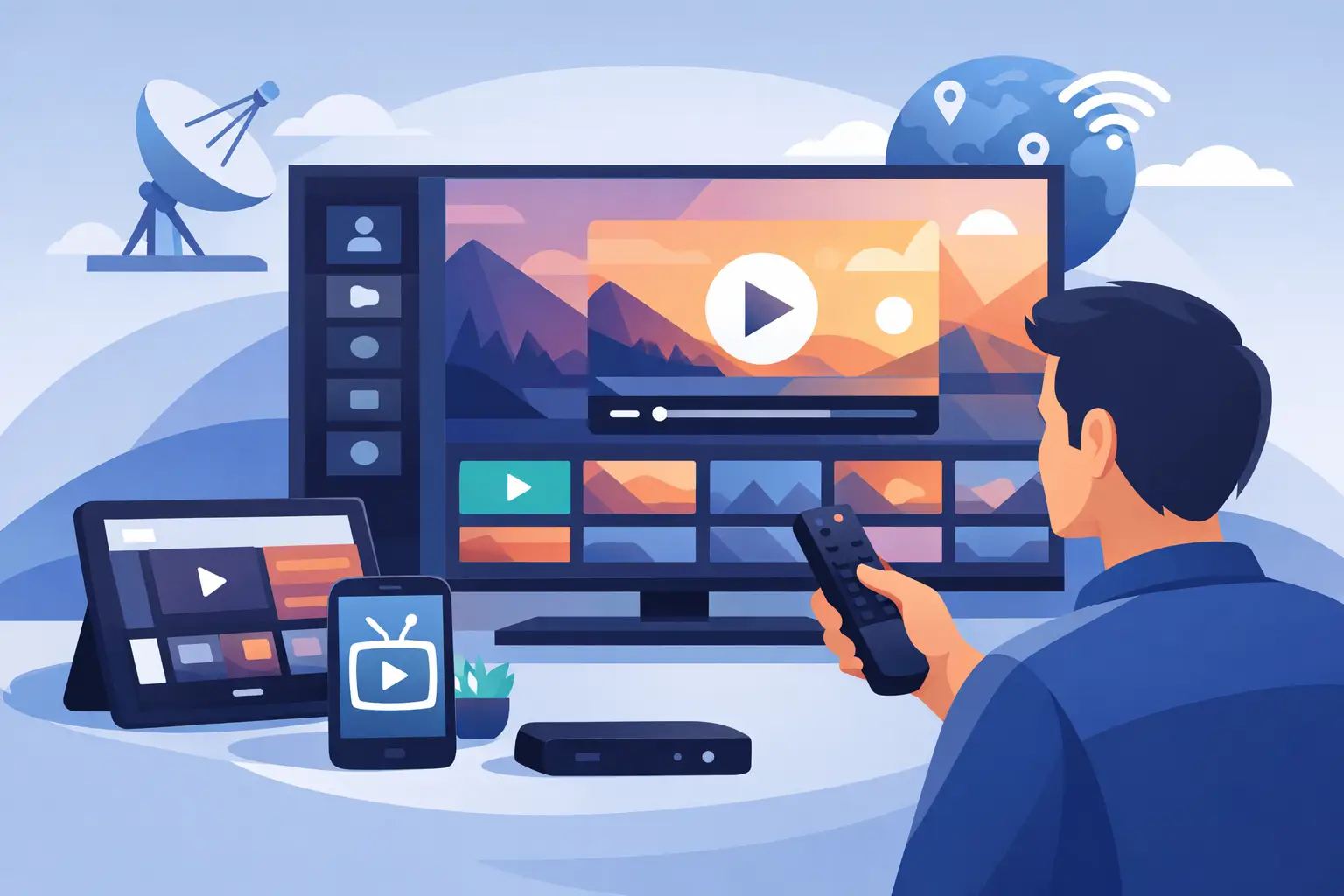
The remote is where an IPTV service either becomes part of the household routine or turns into a frustrating project. This OTT Navigator app review looks at the player from that practical perspective: how it handles live TV, archives, favorites, multiple devices, and the large channel lists that Russian-speaking families often want in one place.
OTT Navigator is not a TV subscription by itself. It is an IPTV player that organizes channels and plays a playlist supplied by your provider. That distinction matters. The app can give you a flexible, polished way to watch, but the number of channels, video quality, archive availability, and content selection depend on the IPTV service and plan connected to it.
What OTT Navigator Does Well
For viewers who want more control than a basic Smart TV player provides, OTT Navigator has a lot to offer. It is designed around IPTV use, with tools for browsing channel lists, creating favorites, checking program guides, and moving between live television and replay content.
The interface can feel more detailed than a simple streaming app at first. That is the trade-off for having options such as channel groups, custom sorting, multiple playlists, parental controls, picture-in-picture support on compatible devices, and display settings. Once the initial setup is complete, most family members will mainly use the guide, favorites list, and playback controls.
The app is especially useful with a broad Russian-language IPTV package. A service with news, entertainment, children’s programming, movies, sports, regional channels, and archived broadcasts needs good organization. OTT Navigator lets viewers place frequently watched channels where they are easy to find instead of scrolling through hundreds or thousands of entries.
Favorites and channel organization
Favorites are one of the strongest reasons to use this player. A household can create a practical short list with children’s channels, Russian news, popular entertainment, sports, and movie channels. This reduces the time spent searching and makes the experience friendlier for viewers who do not want to manage a large electronic program guide every day.
Channel groups are also helpful when your playlist includes categories by country, genre, or quality. You can keep live TV organized without losing access to the full selection when someone wants a specific channel.
Program guide and archive support
When an IPTV provider includes an electronic program guide, OTT Navigator can display what is currently playing and what is coming next. This is valuable for viewers following live news, concerts, sports, or scheduled shows.
Archive and catch-up functions depend on the provider’s service. If the playlist includes replay access, the app can make it easier to choose an earlier program from the guide. If a channel has no archive supplied by the provider, no player setting can add one. Before choosing a plan, confirm whether archive viewing is available for the channels your household watches most.
OTT Navigator App Review: Setup and Daily Use
Setup is straightforward when you have the correct details from your IPTV provider. Usually, you will receive a playlist URL, portal information, or account credentials. Enter those details in the app, allow the playlist and guide to load, and then test several channels before spending time on customization.
For a service such as Russia Plus TV, the player can be used as one of several ways to watch a subscription on compatible devices. It is a good option for users who prefer a dedicated IPTV interface rather than watching only through a browser or a basic built-in player.
A practical setup approach
Start by adding only the playlist or account information provided with your subscription. Avoid downloading random public playlists or entering credentials into unofficial copies of an app. A legitimate subscription gives you a more reliable channel list, customer support, and clearer expectations around access.
After the channels load, open the program guide and give it time to populate. Then create a favorites group before changing advanced settings. This order keeps setup simple: first confirm playback, then make the interface comfortable for daily viewing.
If the picture pauses or a channel does not start, test your home connection and try another channel. Problems can come from Wi-Fi signal strength, a temporary source issue, an outdated app version, or an incorrect playlist. Ethernet is often the better choice for a TV box when watching HD, Full HD, or 4K streams, especially in a home where several people use the internet at once.
Is it easy for the whole family?
It depends on the device and on how much customization you do. On an Android TV device or a TV box with a proper remote, OTT Navigator is generally comfortable for channel surfing and guide browsing. The larger screen makes program information easier to read, and remote buttons are familiar to regular TV viewers.
On a phone or tablet, the app is convenient for watching away from the main TV, but its deeper menu options can feel crowded on a smaller display. That does not make it difficult to use, but it is best to configure favorites and preferences on a larger screen if possible.
For older relatives or younger viewers, keep the setup focused. Create favorites, set a sensible channel order, and avoid changing technical playback options unless there is a specific issue. The fewer choices they need to make, the more the app feels like regular television.
Device Compatibility and Performance
OTT Navigator is most commonly associated with Android-based devices, including Android TV devices, TV boxes, phones, and tablets. Compatibility can vary by device model, operating system version, and app store availability, so it is smart to check your specific device before planning your household setup.
A dedicated TV box is often the most practical choice for households that want IPTV on the main television. It can provide a smoother remote-control experience and may have stronger processing power than an older Smart TV. For secondary viewing, an Android phone or tablet gives family members a flexible option in another room or while traveling.
Performance is not only about the app. Your internet connection, router placement, device age, and stream quality all affect the result. A stable connection is more useful than a very high advertised speed with weak Wi-Fi coverage. If one room has frequent buffering, moving the router, using a mesh system, or connecting the TV box by Ethernet may help more than changing player settings.
Where OTT Navigator Has Limits
This is a capable player, but it is not the best fit for every viewer. Its strength is customization, and customization brings more menus. Someone who wants the simplest possible experience may prefer a provider’s own app or a more basic IPTV player with fewer controls.
The app also cannot repair problems originating outside the player. It cannot create missing channels, improve a poor home internet connection, or provide an archive when the subscription does not include one. Think of it as the screen and controls for your IPTV service, not the service itself.
There can also be a learning curve when using multiple playlists or advanced viewing modes. Those features are useful for experienced users, but they are not necessary for watching everyday Russian television. Most households will get the best results by keeping one reliable playlist, one clear favorites list, and a correctly loaded guide.
Who Should Choose OTT Navigator?
OTT Navigator makes sense for viewers who want a customizable IPTV experience on compatible Android-based devices. It is particularly appealing if you watch a wide range of channels, use replay features, or want to organize a large Russian-language selection around your family’s preferences.
It may be less appealing if your priority is the fewest possible setup steps. In that case, use the viewing method that your IPTV provider supports most directly on your TV, phone, or computer. The best player is the one that works reliably on the devices you already use and is easy for everyone in the home to understand.
A well-organized favorites list can make a large IPTV subscription feel personal from the first evening: news for one viewer, cartoons for another, a familiar series for later, and live television ready whenever the family gathers.