
A missed news broadcast, a favorite Russian series airing at the wrong hour, or a child asking for familiar cartoons can make a television service feel far more important than a simple utility. For Russian-speaking households in the United States, the choice between IPTV versus satellite often comes down to one question: which option makes familiar live TV and entertainment easier to watch every day?
Satellite television and IPTV can both deliver television programming, but they work in very different ways. One relies on a dish and dedicated receiver equipment. The other uses your internet connection and can work across the screens already in your home. The right choice depends on your location, internet service, viewing habits, and the kind of channel selection your family expects.
IPTV Versus Satellite: The Main Difference
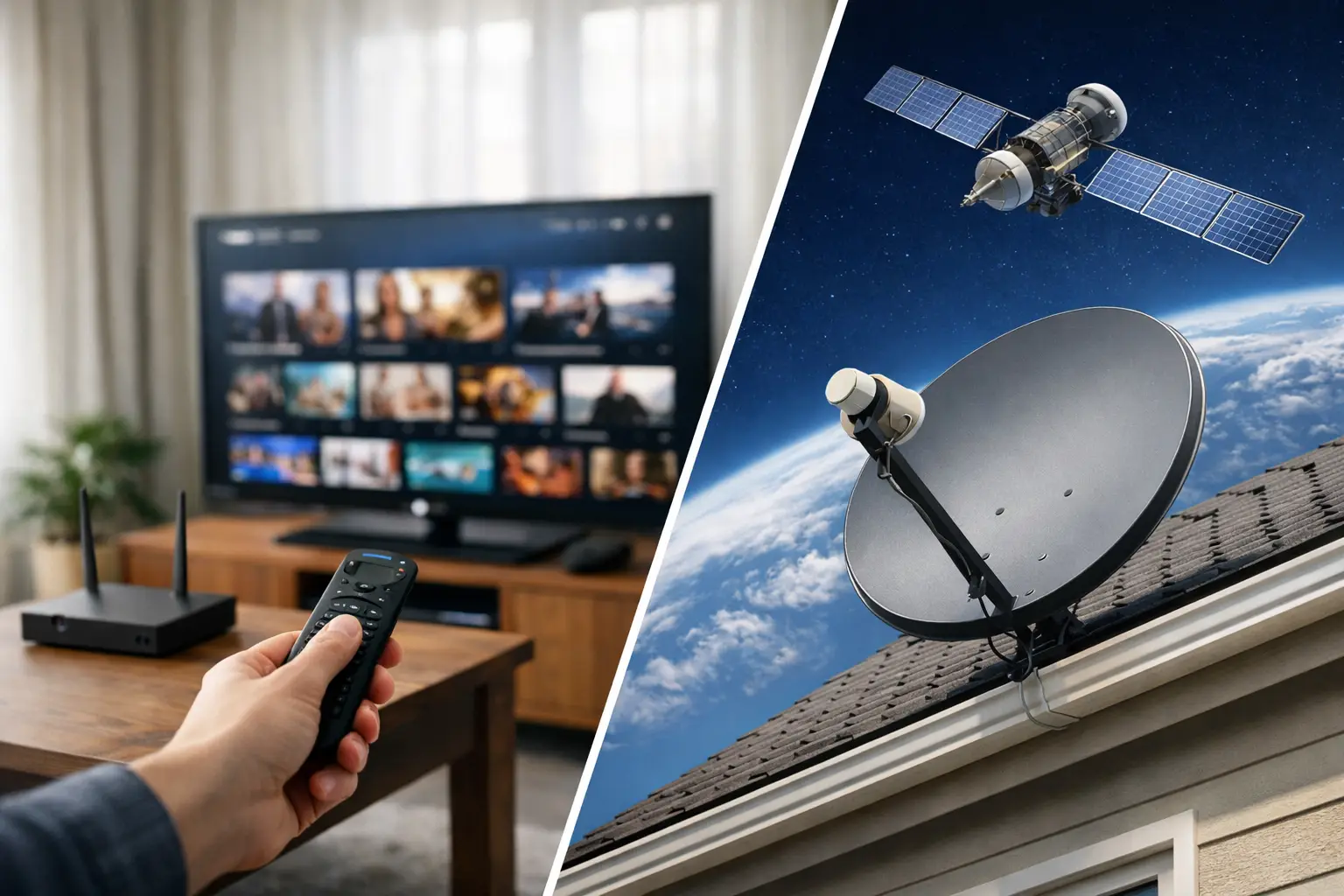
Satellite TV sends a television signal from a satellite in space to a dish installed outside your home. The dish connects to a receiver, which then connects to your television. This system does not depend on your home internet connection for live channels, but it does require a clear view of the sky and professional or careful self-installation.
IPTV, or Internet Protocol Television, delivers live channels and on-demand programming through the internet. Instead of receiving a signal through a dish, you sign in through a compatible app, set-top box, Smart TV, computer, tablet, or phone. Your device streams the channel through your home Wi-Fi or wired internet connection.
Neither format is automatically better in every situation. Satellite can be useful in locations with weak or unreliable internet. IPTV is usually the more flexible option for households with dependable broadband that want more screens, more content choices, and less hardware around the home.
Setup: Dish Installation or App-Based Viewing
The installation process is one of the clearest differences.
With satellite, you need a dish mounted where it can receive a signal without trees, buildings, or other obstructions in the way. Renters may need landlord approval before mounting equipment. Apartment residents can face limited placement options, especially when balconies or building rules restrict where a dish can go. You may also need a receiver for each TV or a multi-room setup from the provider.
IPTV typically has a shorter path from subscription to viewing. If you have a compatible device and stable internet, you can install an app or add a playlist to a supported player, enter your account details, and start watching. Many viewers use the television in the living room as their main screen, then add phones, tablets, or computers for personal viewing in other rooms or while traveling.
This flexibility matters for families. One person may want live news on the Smart TV while another watches a movie on a tablet. IPTV is designed around connected devices, so it fits naturally into homes where people already use streaming services.
Device Compatibility Changes the Experience
Satellite equipment is built mainly for television viewing. It is a familiar experience: turn on the TV, use the receiver remote, and browse the guide. For some viewers, that simplicity is appealing.
IPTV can also be simple, but it offers more ways to watch. Depending on the service and device, it may work through Smart TVs, Android TV boxes, phones, tablets, computers, and m3u8-compatible players such as VLC, OTT Navigator, or Televizo. This is especially helpful when a household does not want to purchase or lease separate equipment for every screen.
Before choosing an IPTV service, confirm that your device is supported and that you understand the setup steps. A good provider should offer clear instructions, account help, and support when you need it.
Channel Selection and Russian-Language Content
For Russian-speaking viewers outside their home media markets, channel availability is often the deciding factor. Traditional satellite packages can offer a selected group of international channels, but the lineup may be limited by regional packages, equipment requirements, and the provider’s distribution agreements.
IPTV services can offer a broader mix of live channels and entertainment in one subscription. The value is not only the number of channels, but also the variety: news, movies, series, children’s programming, music, documentaries, sports, concerts, and regional content. A household may want Russian channels for parents and grandparents, Ukrainian or other regional programming for relatives, and cartoons or educational shows for children.
Russia Plus TV, for example, provides access to more than 3,500 channels along with films, series, cartoons, sports, and other on-demand entertainment. For families that want more than a small international package, this kind of selection can reduce the need to combine multiple services.
Channel counts should always be viewed carefully. More channels are useful only when the lineup includes programming your household will actually watch. Check for your preferred news channels, local or regional content, children’s channels, movie options, and live sports before subscribing.
Replay and On-Demand Viewing Are Major IPTV Advantages
Satellite is strongest when you want to watch a channel as it airs. You can often record shows with a compatible DVR, but that may involve additional hardware, storage limits, or extra monthly charges. If you forget to schedule a recording, the program may be gone.
IPTV is often a better fit for viewers who cannot watch on the broadcaster’s schedule. Time differences between the US and Eastern Europe can make live programming inconvenient. A late-night show in one location may air during work hours or early morning in another.
Many IPTV subscriptions include channel archives or replay features, allowing you to return to earlier broadcasts when available. Combined with an on-demand library, this gives viewers more control over when they watch. You can catch up on a missed episode, put on a children’s program at a convenient time, or choose a movie without waiting for it to appear on a live channel.
Archive availability varies by channel and provider, so it is worth checking how many days of replay are included and whether your most-watched channels support it.
Reliability: Internet Speed, Weather, and Home Networks
Reliability is not just about the provider. It is also about the conditions in and around your home.
Satellite does not use your home internet for television reception, which can be an advantage in rural areas or places with slow broadband. However, severe rain, snow, wind, or heavy cloud cover can occasionally affect the signal. A damaged dish, loose cable, or blocked line of sight can also cause interruptions.
IPTV depends on internet quality. For standard HD viewing, a stable connection is usually more important than a very high advertised speed. Full HD and 4K channels need more bandwidth, particularly if several people stream at the same time. A weak Wi-Fi signal in the room where you watch can create buffering even when your internet plan is fast enough.
For the best IPTV experience, place your router in a central location, use a wired Ethernet connection for your main TV box when practical, and avoid downloading large files during important live events. If you have a large household, choose an internet plan that can handle several active devices at once.
Cost and Everyday Convenience
Satellite service may include installation fees, equipment leases, receiver charges, and contracts. The final monthly cost can be higher than the advertised starting price once extra TVs and international packages are included. Moving to a new home may also mean arranging another installation.
IPTV is generally easier to scale around your needs. It commonly uses a recurring subscription and devices you may already own. There is no outdoor dish to install, adjust, or maintain. If you replace a TV, travel, or reorganize a room, your service can often move with you by signing in on a compatible device.
That does not mean IPTV has no requirements. You need suitable internet service, and some devices may require an app, a player, or a TV box. Still, for many US households, the lower equipment burden and multi-device access make the monthly value easier to understand.
Which Option Should You Choose?
Satellite may make sense if your internet connection is weak, you live in an area with limited broadband choices, and you mainly watch live television on one primary TV. It can also suit viewers who prefer a dedicated receiver and do not need replay, mobile access, or a large on-demand library.
IPTV is often the better choice if your home already has reliable internet and you want Russian-language entertainment on more than one device. It is particularly practical for families that value a large channel selection, archived broadcasts, movies and series on demand, and the freedom to watch in the living room, bedroom, kitchen, or while away from home.
Before deciding, look at your actual routine rather than just comparing technology. Think about the programs your family watches, the devices you own, your internet connection, and whether watching on your own schedule would make daily life easier. The best television service is the one that keeps familiar voices, stories, and live events within reach when your household wants them.