
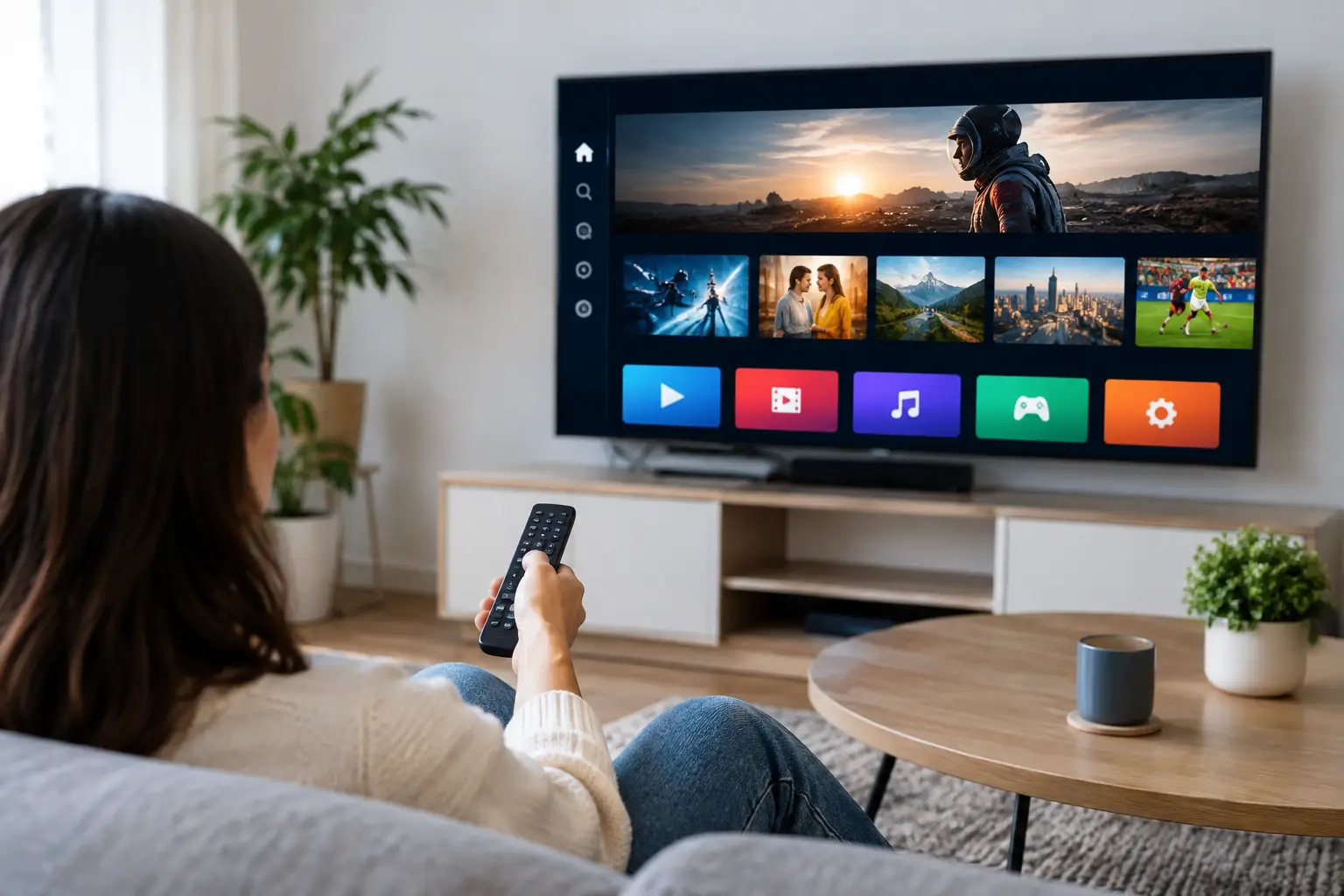
A family in the U.S. may want the evening news on the living room TV, a favorite series on a tablet, and a children’s channel available later when everyone is home. That is where IPTV technology trends are changing the everyday viewing experience. The biggest improvements are not about complicated equipment. They are about getting more familiar live and on-demand content, better picture quality, and more control over when and where your household watches.
For Russian-speaking viewers outside their home media market, these changes are especially useful. A good IPTV service can bring Russian, Ukrainian, and regional programming together in one subscription while working on the devices already in your home.
IPTV Technology Trends That Matter at Home
Not every new streaming feature changes how people watch television. The trends worth paying attention to solve practical problems: missed broadcasts, limited device choices, unclear picture quality, and separate subscriptions for live channels and entertainment.
Higher-quality streaming is becoming more common
HD is now an expected standard for many viewers, while Full HD and 4K programming continue to expand where the channel, device, and internet connection support them. Better video compression helps deliver a clearer picture without requiring the same level of bandwidth older streaming methods needed.
That does not mean every channel should be watched in 4K. News, older films, and many archive programs may be perfectly enjoyable in HD. A higher-resolution stream also uses more data and can expose weaknesses in a home Wi-Fi network. The practical goal is reliable quality that matches your screen and connection, not simply choosing the largest number on a settings page.
For the best results, a modern Smart TV or TV box should be connected by Ethernet when possible. If Wi-Fi is the only option, placing the router closer to the TV and reducing interference from other devices can make a noticeable difference during live sports, concerts, and popular evening broadcasts.
Time-shifted TV is replacing fixed schedules
Traditional television requires viewers to be present at a specific hour. IPTV makes that limitation less necessary through channel archives, replay features, and recorded programming. If a workday runs late or a child’s activity overlaps with a show, viewers can often return to the program afterward instead of missing it completely.
This is one of the most useful changes for households across U.S. time zones. A live program airing at an inconvenient hour can still fit into the family’s schedule later. It also makes television easier to share in a household where everyone has different routines.
Archive availability can vary by channel and program rights, so it is sensible to treat replay as a major convenience rather than assume every broadcast will be stored forever. Still, access to recent broadcasts changes IPTV from a live-only experience into a more flexible entertainment library.
One subscription now supports more screens
Multi-device compatibility is no longer an extra feature. It is a basic expectation. Viewers want to begin a movie on a Smart TV, check live news on a phone, or use a tablet while traveling without learning a different system for every screen.
Current IPTV platforms are designed for Smart TVs, Android TV and other set-top boxes, smartphones, tablets, and computers. Support for m3u8-compatible players also gives experienced users more choice. Apps such as VLC, OTT Navigator, and Televizo can be useful when a household already has a preferred player or a specific device setup.
The trade-off is that more device options can create more setup choices. For most people, the easiest path is to use the app or player best suited to the device and save the playlist details carefully. Once configured, switching between channels and content should feel familiar, much like using any other television service.
The Shift Toward Live TV and On-Demand in One Place
For years, viewers often needed separate services for live channels, films, and series. IPTV is moving toward a single viewing environment that combines live television, channel archives, and on-demand entertainment. This is particularly valuable for families who do not want to manage several subscriptions just to find news, cartoons, sports, documentaries, concerts, and movies in Russian.
A broad catalog matters because different members of the household watch differently. Adults may follow current affairs or talk shows. Children may want cartoons. Someone else may prefer a series, a classic film, or a live game. When these choices are available in one service, the television is more likely to be used by the whole family rather than by one person.
Channel quantity alone is not the full story. An extensive selection is most valuable when navigation is simple, streams are stable, and content categories make sense. Look for a service that balances a large channel lineup with useful archives and a film library, rather than offering a long list that is difficult to use.
Better Playback Depends on Your Home Setup
IPTV technology is improving, but the home connection remains part of the experience. A service can provide high-quality streams, yet buffering may occur if multiple people are gaming, downloading large files, or streaming video on the same network at peak times.
Before blaming the TV app, check the basics. Restarting the router, updating the app, and testing another channel can quickly show whether the issue is local or temporary. If one device has trouble while another works normally, the problem may be the device’s Wi-Fi signal, available storage, or software version.
A wired connection is often the most reliable option for a main television. For phones and tablets, modern Wi-Fi is usually sufficient. Households with several active viewers may benefit from a faster internet plan, but it depends on the number of simultaneous streams and the quality selected. Paying for more speed than you use is not always necessary.
Simple Setup Is Becoming a Real Competitive Advantage
The best IPTV technology is not helpful if setup feels like a technical project. This is why clear activation steps, account access, and device instructions matter as much as channel selection.
A practical setup usually starts with choosing the screen you use most. Install a compatible app on the Smart TV or TV box, or open a player on a computer or mobile device. Add the subscription details or playlist provided by the service, allow the channel list to load, and test a few channels before settling in. Once the main TV is working, adding a phone or tablet becomes much easier.
Russia Plus TV reflects this direction by supporting viewing across common household devices while offering thousands of channels, archived broadcasts, and a wide entertainment library. For viewers who want familiar Russian-language content without a complicated cable package, that combination of choice and device flexibility is the point.
What to Look for as IPTV Keeps Evolving
As platforms add features, focus on the ones that improve daily use. Reliable playback, clear picture options, archive access, responsive support, and compatibility with the devices you own will usually matter more than a feature you may never use.
It is also wise to choose a legitimate subscription service that explains what is included and provides account support. A low price has value only when the service remains dependable and straightforward to access. Be cautious with unofficial playlists that offer unrealistic promises but provide no help when streams stop working or device settings change.
The most useful future of IPTV is simple: television that fits the household instead of forcing the household to fit a broadcast schedule. Choose a service and setup that make it easy to keep familiar language, favorite channels, and family entertainment close at hand wherever you watch.