

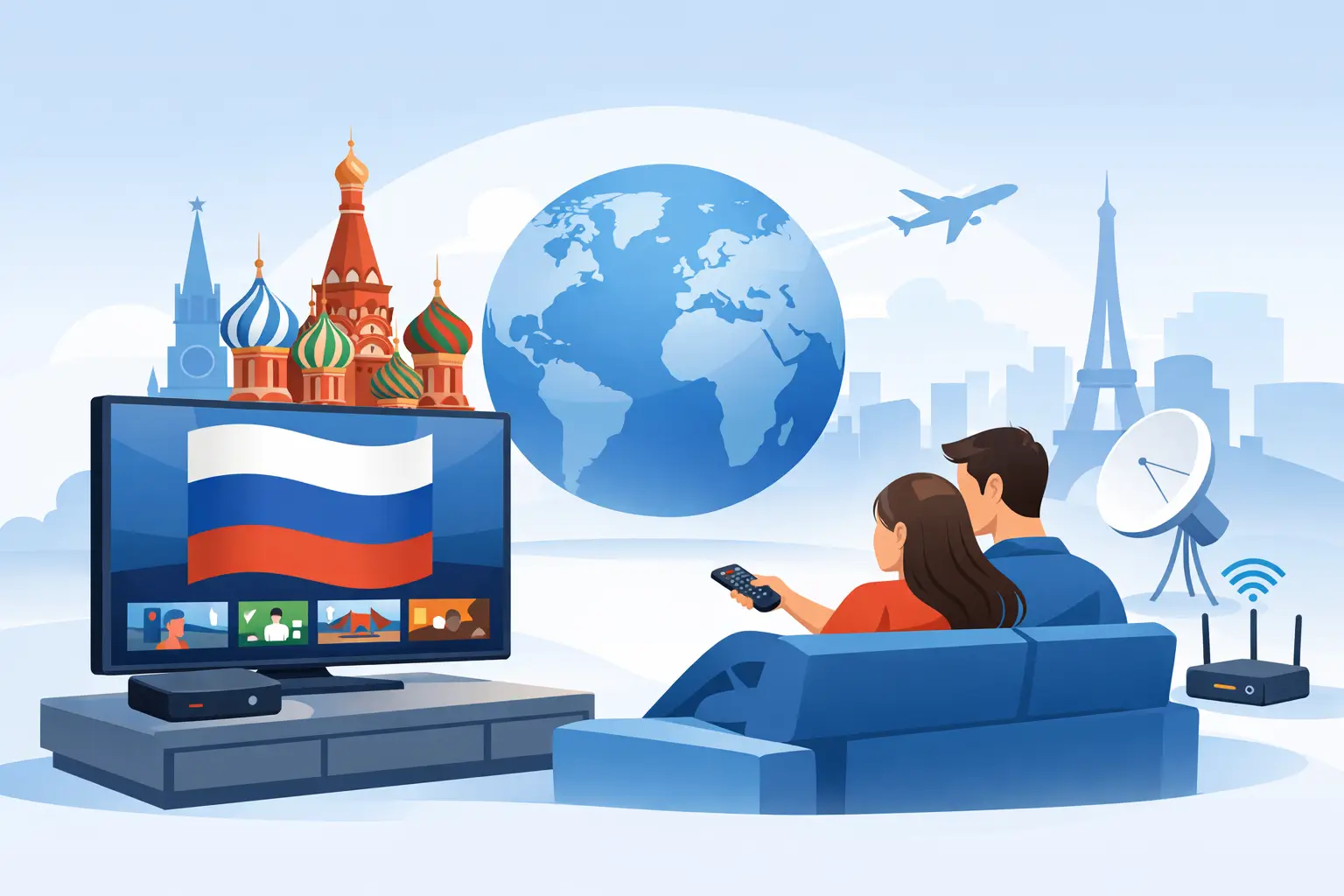
If your regular streaming apps still leave you searching for Russian channels, familiar series, kids’ programming, and live news, an iptv subscription solves a very specific problem. It gives Russian-speaking households outside their home market one place to watch live TV, replay missed broadcasts, and open a large on-demand library without juggling multiple services.
For families in the US, that convenience matters more than flashy features. You want a service that works on the devices already in your home, starts quickly, and offers enough choice for different ages and viewing habits. That usually means live channels for everyday watching, archives for catch-up, movies and series for evenings, and stable playback on Smart TVs, phones, tablets, computers, and TV boxes.
What an IPTV subscription should actually include
Not every service offers the same experience, even when the price looks similar. A strong iptv subscription should combine channel volume, picture quality options, replay access, and broad device compatibility. If one of those pieces is missing, the service can feel limited very quickly.
For most viewers, channel count is the first thing they notice, but it should not be the only factor. A large catalog is useful when it includes channels people really watch – news, entertainment, movies, sports, documentaries, children’s content, music, and regional programming. The real value comes when that variety is organized in a way that helps the whole family find something familiar without wasting time.
Archives are just as important as live access. Time zones, work schedules, and family routines often make live viewing inconvenient, especially in the US. Replay and recorded content let you watch on your own schedule instead of planning your day around broadcast times. That can be the difference between paying for a service and actually using it every week.
Then there is on-demand content. Many households do not want one subscription for live channels and another for movies or shows. A service that combines live television with a film and series library is simply more practical. It reduces monthly clutter and makes it easier to keep entertainment in one place.
Why an IPTV subscription works well for Russian-speaking families
The main reason is simple: it keeps language and culture close at hand. For many households abroad, TV is not just background noise. It is how parents stay connected to current events, how grandparents watch familiar presenters, and how children hear the language regularly through cartoons, films, and family programming.
That is why breadth matters. A family-friendly service should not focus on one category alone. It should support different routines throughout the day – news in the morning, cartoons after school, series in the evening, and movies or concerts on weekends. When one subscription covers those needs, it feels less like a niche add-on and more like a complete home entertainment option.
There is also a practical side. Many users are comfortable with streaming, but they do not want technical friction. A good service should feel straightforward from the first login. If setup takes too long or playback depends on complicated steps, people lose interest fast. Ease of use is not a bonus. It is part of the product.
Device support matters more than most people expect
A lot of subscribers start on one screen and quickly realize they need more flexibility. You may want full-screen viewing on a Smart TV at home, quick access on a phone while traveling, and a tablet for kids in another room. That is why broad compatibility is one of the most useful parts of a modern IPTV service.
Smart TVs and set-top boxes are usually the preferred option for everyday viewing because they feel closest to traditional television. Phones and tablets matter for convenience, especially when you want instant access without turning on the main screen. Computers are still useful for work-from-home setups or casual watching in a browser or media player.
Some viewers also prefer third-party players such as VLC, OTT Navigator, or Televizo. That can be a real advantage if you already have a setup you like. The best services do not force one viewing method. They support the devices and apps people already use.
This flexibility is where a provider like Russia Plus TV fits naturally. A service built around wide compatibility, simple onboarding, and access across Smart TVs, mobile devices, computers, and m3u8-compatible players removes a lot of the guesswork for new subscribers.
How to choose the right IPTV subscription
Start with content, not marketing language. Look at whether the service offers enough live channels in the categories your household actually watches. A huge number sounds impressive, but it only matters if the catalog reflects your needs.
Next, check for archives and replay. This feature is especially useful for viewers outside the original broadcast region because time differences can make live programming less practical. If you routinely miss evening shows or sports broadcasts, archive access has real value.
After that, think about video quality. HD is the baseline for many homes now, while Full HD and 4K can make a noticeable difference on larger screens. That said, better quality also depends on your internet connection and device performance. If your connection is modest, stability may matter more than chasing the highest resolution.
Then consider setup. A service should provide clear instructions for activation, playlist access, account management, and troubleshooting. That support matters most in the first day or two, when people decide whether the subscription feels easy or frustrating.
Finally, compare cost against scope. A low monthly price is attractive, but it needs to include enough channels, reliable access, and viewing flexibility to justify staying subscribed. Cheap but limited often becomes expensive once you add other services around it.
What to expect from setup and everyday use
For most users, getting started should be simple. You subscribe, receive access details or a playlist, open the service on your chosen device or app, and begin watching. If the provider supports common platforms well, the process is fast enough that even non-technical users can get comfortable with it.
Daily use should be just as easy. Open the app or player, choose a live channel or archived program, and switch to a movie or series when you want something on demand. This is where good organization matters. Even a very large library should still feel manageable.
If several family members use the service, convenience becomes even more important. Parents may want news and talk channels, children may go straight to cartoons, and someone else may prefer sports or films. A broad catalog only works if people can move through it without confusion.
Common trade-offs to keep in mind
More channels do not always mean a better personal fit. Some subscribers want maximum variety, while others would be happier with fewer channels and stronger emphasis on films, kids’ content, or replay features. It depends on how your household watches.
The same goes for device choice. Watching on a Smart TV usually feels best for long sessions, but phones and tablets win on convenience. A service that supports both gives you room to choose instead of forcing one habit.
Picture quality also involves trade-offs. 4K sounds appealing, but stable HD or Full HD may be the better everyday experience if your network is busy or multiple devices are streaming at once. Reliability often matters more than headline specs.
A practical standard for value
A worthwhile iptv subscription should make life easier, not more complicated. It should bring live Russian-language television, archived broadcasts, movies, series, kids’ content, and sports together in one affordable service that works across the devices you already own.
That is the standard many households are really looking for – enough choice for the whole family, simple setup, steady access, and the freedom to watch live or later. When a service delivers that consistently, it stops feeling like just another subscription and starts feeling like the easiest way to keep home close.